Tray Chic: What 20 Hospital Cafeterias Taught Me About How America Really Eats
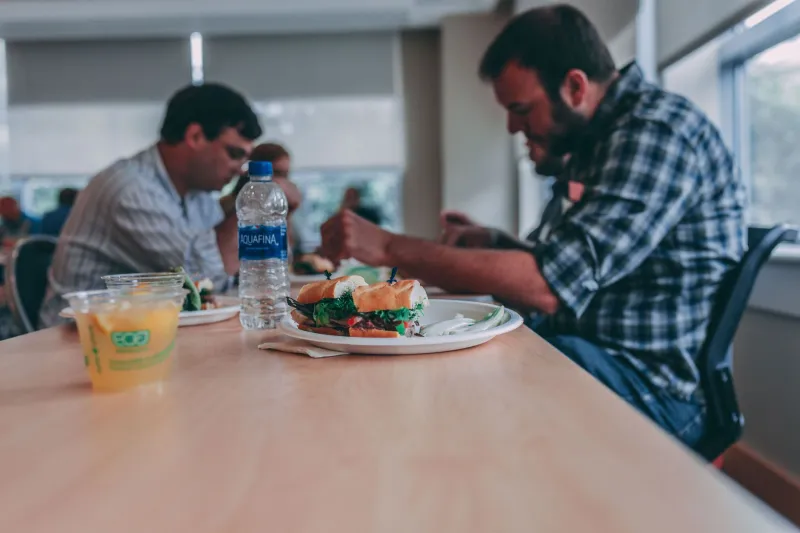
Let me set the scene. It's 11:47 a.m. on a Tuesday. I'm wearing a visitor's lanyard I obtained under entirely legitimate circumstances, carrying a tray that smells faintly of industrial sanitizer, and staring down a steam table that stretches roughly the length of a city block. A woman in scrubs is loading a plate with what appears to be genuinely excellent jerk chicken. A man in a hard hat is debating between two soups with the focused intensity of someone choosing a mortgage. A cardiologist — I assume, based on the badge — is eating a cheeseburger with zero apparent irony.
This is the hospital cafeteria. America's most unexamined dining institution. And I ate in twenty of them so I could tell you what's actually going on in there.
Why Hospitals? Why Now?
Here's the thing about hospital cafeterias that nobody talks about: they feed everyone. Not just patients — patients barely use them. The real clientele is a cross-section of American working life that no restaurant could manufacture if it tried. Nurses coming off night shifts. Maintenance crews on a 30-minute break. Radiologists who haven't seen sunlight since October. Grief-hollowed families grabbing coffee between consultations. Medical students surviving on whatever fits between rounds.
When a cafeteria has to feed all of those people, every single day, without the luxury of a Yelp profile or an Instagram aesthetic, something interesting happens. It either completely gives up — and you end up with the steam-tray wasteland of your nightmares — or it quietly gets very, very good at feeding people who actually need to be fed. No performance. No $22 cocktails to pad the margins. Just food, doing its job.
I wanted to know which kind I'd find, and how often.
The Methodology (Loose Term)
Over the course of several months, I visited twenty hospital cafeterias across twelve states, choosing a mix of large urban academic medical centers, mid-size regional hospitals, and smaller community facilities in less obvious zip codes. I paid for every meal out of pocket, visited during peak lunch hours when the operation is under maximum stress, and ordered whatever looked like the kitchen was most proud of it — which is a skill, by the way, applicable to any cafeteria, diner, or steam-table situation you find yourself in. You look for the dish with the shortest tray life. The one getting restocked. The thing the person behind the counter points to without being asked.
I did not tell anyone I was writing about them. Foodie in Disguise is not just a name.
The Low End: A Moment of Silence
I won't name names — these people have enough going on — but let me describe the worst of what I encountered, because it's important context.
Some hospital cafeterias have clearly not updated their culinary philosophy since the Clinton administration. Beige food. Everything beige. Mashed potatoes the color and texture of spackling compound. A "pasta bar" that is just penne in a vat of something that was probably marinara at some point in its life. Iceberg lettuce performing a salad bar from memory. The kind of coffee that makes you understand, on a cellular level, why caffeine addiction is classified as a disorder.
At two facilities, I watched the person ahead of me in line receive a plate of food and then just... stand there for a moment, holding it, in a posture I can only describe as resigned acceptance. That's the low end. It exists. It is depressing.
The High End: Okay, I Did Not Expect This
But here's where it gets interesting.
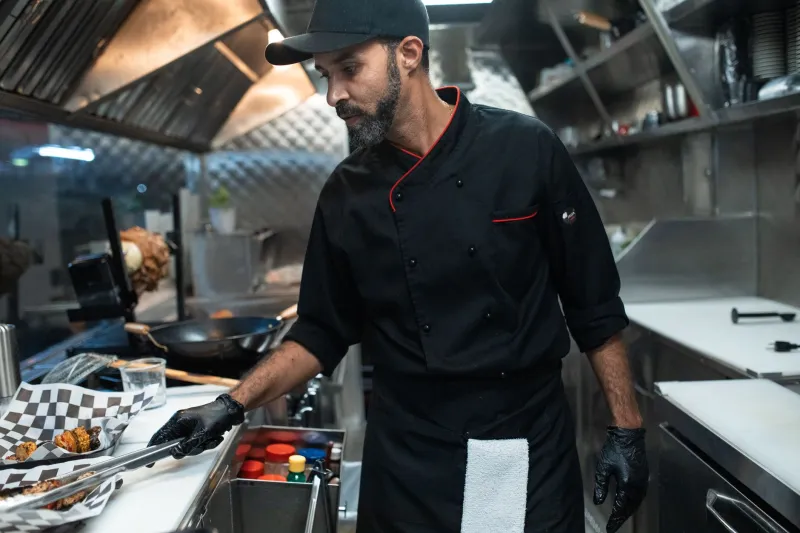
At a large academic medical center in the South, I ate a bowl of red beans and rice that would have been entirely at home in a well-regarded New Orleans neighborhood joint. The andouille had actual snap. The rice was cooked correctly — not the cafeteria default of wet, clumped sadness. The woman ladling it out told me the chef had grown up in Louisiana and had been running the hot line there for eleven years. Eleven years. In a hospital cafeteria. By choice.
At a Midwestern teaching hospital, the salad bar was genuinely stocked with things I recognized as vegetables in their natural form — roasted beets, shaved fennel, farro, pickled red onions. Someone had made a tahini dressing from scratch. A tahini dressing. In a hospital. In Ohio.
In the Pacific Northwest, I had a bowl of pho — real pho, with a broth that had clearly been going for hours — at a hospital cafeteria that had quietly built an entire Southeast Asian station staffed by a cook whose family had been running a Vietnamese restaurant in the same city for thirty years before she took this job for the benefits and the hours.
That last detail matters more than it might seem.
The Chefs Who Chose Mission Over Michelin
The best hospital cafeterias I visited shared one thing: a chef or food service director who had made a deliberate, eyes-open choice to be there. Not a fallback. Not a defeat. A decision.
The reasons varied. Benefits. Stability. Feeding people who genuinely needed it rather than people performing the act of being fed. One chef told me, without a trace of self-pity, that he'd done fine dining for twelve years and got tired of cooking for people who were going to take a photo of the plate before they tasted it. "Here," he said, gesturing at a room full of nurses and orderlies and a few shell-shocked families, "people are hungry. Real hungry. That's more interesting to me."
That's a real culinary philosophy. It just doesn't come with a James Beard nomination.
What the Tray Tells You
The other thing hospital cafeterias do, accidentally and without trying, is reflect the community around them with unusual accuracy. A hospital in a city with a large Somali immigrant population had a halal station that was clearly the most popular thing in the room. A facility in the Texas Hill Country was running a barbecue station on Fridays that drew staff from three floors down based on smell alone. A hospital in a heavily Vietnamese neighborhood in Northern California had a banh mi option that was, and I want to be precise here, better than most dedicated sandwich shops I've visited.
Restaurants can chase demographics. Hospital cafeterias just have to feed whoever shows up. The result, at its best, is a kind of accidental community portrait — a picture of what a neighborhood actually eats when it's not trying to be on trend.
The Verdict
Out of twenty cafeterias, I'd classify six as genuinely worth a visit if you happen to have legitimate access to the building — and before you ask, yes, most hospital cafeterias are open to the public, or at least not actively checking credentials at the steam table. Four were fine, competent, doing the job without distinction. The remaining ten ranged from forgettable to actively demoralizing.
But even the worst of them told me something. About budget constraints, about institutional food culture, about what happens when feeding people is treated as overhead rather than mission. The best of them told me something I didn't expect going in: that some of the most sincere cooking in America is happening in rooms with fluorescent lighting and no Yelp page, made by people who decided that feeding someone who's scared or exhausted or just trying to get through a Tuesday shift is reason enough to make the broth right.
Eating dangerously doesn't always mean the food is trying to kill you. Sometimes it means eating in places nobody thinks to look.
Next time you're near a major medical center around noon, I'm just saying: bring your appetite and a visitor's lanyard. The jerk chicken might surprise you.