Same Fryer, Different Name: Unmasking the Phantom Restaurants Haunting Your Delivery App
Let me tell you about Coastal Crave Tacos.
Coastal Crave Tacos has a logo. It has a curated Instagram aesthetic — lots of lime wedges and strategic cilantro placement. It has 4.4 stars on Uber Eats and a review from someone named DaveK_1987 who called the birria "life-changing." What Coastal Crave Tacos does not have is a physical address you can visit, a staff that knows it by name, or any meaningful existence outside of a tablet propped on a prep counter inside a Denny's in Naperville, Illinois.
Welcome to the ghost menu economy. Population: you, every Friday night, slightly drunk, absolutely not reading the fine print.
The Haunting Begins at a Commercial Kitchen in Anywhere, USA
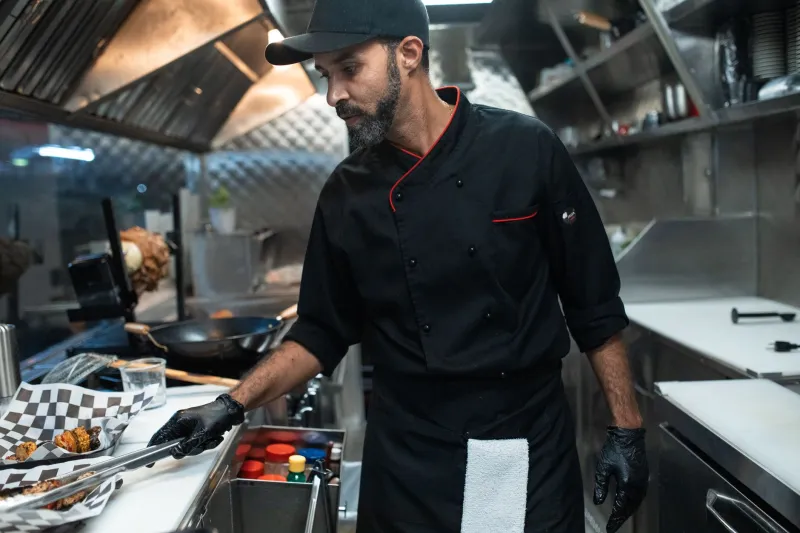
Here's how the trick works. A restaurant — let's say a mid-tier sports bar, a chain diner, or an Italian-American spot coasting on its 2009 Yelp momentum — has excess kitchen capacity. Empty lunch hours. Idle fryers. A grill cook named Marcus who's genuinely talented and deeply underutilized between the 11 AM rush and the dinner crowd.
So the owner, or a third-party virtual brand company (and yes, those absolutely exist, with names like Virtual Dining Concepts and Nextbite), creates a new "restaurant" that lives exclusively on delivery platforms. Different name. Different menu. Different vibe. Same kitchen. Same Marcus. Same fryer that's been frying the sports bar's mozzarella sticks since 2014.
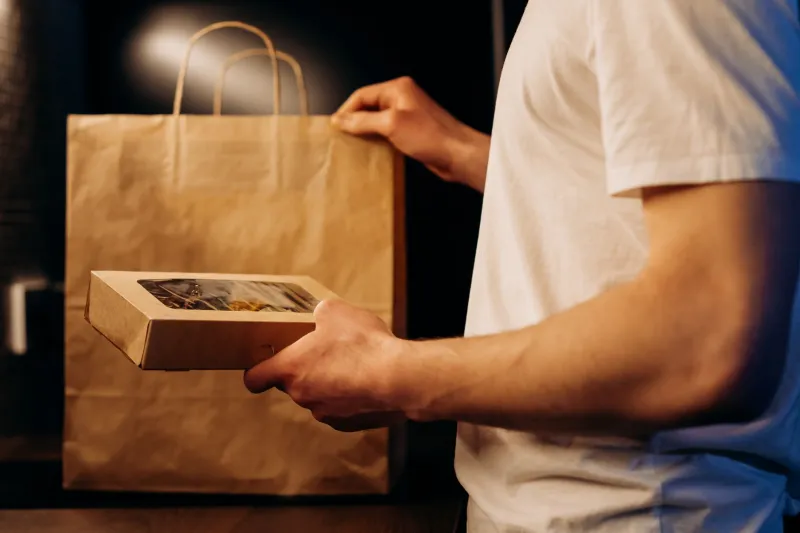
The new brand gets its own listing on DoorDash, Grubhub, and Uber Eats. The algorithm treats it like a new restaurant opening. The platform promotes it. You, scrolling hungrily at 10:47 PM, see it near the top of your feed and think: oh, I haven't tried this place. You order. Marcus makes your food. A driver picks it up from the back entrance of Mulligan's Bar & Grill and hands it to you in a bag that says "Coastal Crave Tacos" on a sticker someone printed at Staples.
DaveK_1987 leaves five stars. The cycle continues.
The Delivery Drivers Know Everything (And They're Not Telling You)
If you want the real intelligence on this operation, talk to the people who actually see behind the curtain: delivery drivers.
"You pull up to the address and it's a Denny's," one driver in the Chicago suburbs told me, with the exhausted clarity of someone who has explained this approximately four hundred times. "You go inside and ask for the Coastal Crave order and the hostess just points at the back. You pick it up from the same window as the Grand Slam."
Drivers working dense urban markets say they routinely pick up orders for three, four, sometimes five different "restaurants" from the same address in a single shift. A wing concept, a burger brand, a dessert-focused virtual spot, all operating simultaneously out of one commercial kitchen. The drivers don't care — they're paid per delivery. But they've developed a kind of bemused anthropological awareness of the whole arrangement that most customers never achieve.
"People rate the restaurants like they're real places," another driver noted. "Like they're gonna go back and sit down. There's nowhere to sit down. It's a Subway."
The Line Cooks Are Conflicted (Except About the Tips)
Spend enough time reporting on this beat and you'll find kitchen workers with genuinely mixed feelings about the ghost menu situation. On one hand, virtual brands keep kitchens profitable during slow hours, which keeps staff employed and schedules fuller. On the other hand, cooking under four different brand names during a single shift without any additional recognition, training, or compensation has a way of wearing on a person.
"We had this wing brand for a while," a line cook at a casual dining chain — who asked not to be named, for reasons that will become obvious — explained. "They gave us a laminated sheet with the sauce recipes. That was it. No training. No context. Just: here's your new restaurant, also you're still making our regular wings at the same time, good luck."
The irony, he admitted, is that the virtual wing brand's honey garlic sauce was genuinely better than anything on his restaurant's actual menu. Customers agreed. The virtual brand briefly outperformed the host restaurant on delivery platforms before the company quietly discontinued it for reasons no one in the kitchen ever fully understood.
This is the strange paradox at the heart of the ghost kitchen economy: the alter ego sometimes upstages the original.
Why the Algorithm Loves a Good Ghost Story
Delivery platforms are, at their core, discovery engines. They want to surface new options to keep users engaged. A new restaurant listing — even one that's actually a twelve-year-old diner in a new outfit — reads as novelty to the algorithm. It gets promoted. It accumulates reviews from customers who have no idea they're reviewing a fiction.
This creates a feedback loop that's equal parts brilliant and deeply strange. Virtual brands can achieve significant ratings momentum before anyone realizes the food is coming from an establishment they might have deliberately avoided. The Yelp reviewer who left five stars for a "restaurant" that doesn't exist isn't wrong, exactly — the food was real, the experience was real — but they've contributed to a review ecosystem that's increasingly untethered from physical reality.
One Yelp review I found, left for a virtual taco brand operating out of a pizza shop in Phoenix, read: "Amazing spot, super authentic, definitely coming back." The reviewer has never been there. There is no there to go back to. This is, somehow, a five-star experience.
The Verdict from Your Correspondent in the Field
Here's where I land after spending more time than is professionally advisable ordering from restaurants that technically don't exist: I'm not mad about it.
Is there something a little unsettling about a delivery ecosystem where nothing is quite what it claims to be? Sure. Is it worth getting worked up about? Probably not, given that the alternative is a world with fewer late-night food options and Marcus underutilizing his talents on mozzarella sticks.
The ghost kitchen economy is, in its weird way, a genuinely democratic food development. It lets talented cooks experiment with new concepts without the crushing overhead of a brick-and-mortar launch. It fills gaps in delivery coverage for neighborhoods that major chains ignore. And occasionally — not always, but occasionally — it produces something legitimately delicious that wouldn't exist otherwise.
Just don't try to make a reservation. They'll look at you like you've lost your mind.
Coastal Crave Tacos is a composite fictional brand. Any resemblance to your actual Friday night Uber Eats order is purely coincidental and also entirely possible.