In Defense of Weird American Food: A Field Report from the People Who Actually Eat It
There is a particular kind of food content that has become its own genre: the visiting journalist who travels to a regional American city, orders the local specialty with barely concealed skepticism, makes a face at the camera, and then delivers a verdict that ranges from surprisingly edible to charmingly bizarre. It's condescending. It's lazy. And it has been done to Cincinnati chili so many times that the city's residents have developed what I can only describe as a collective eye-roll reflex.
This is not that article.
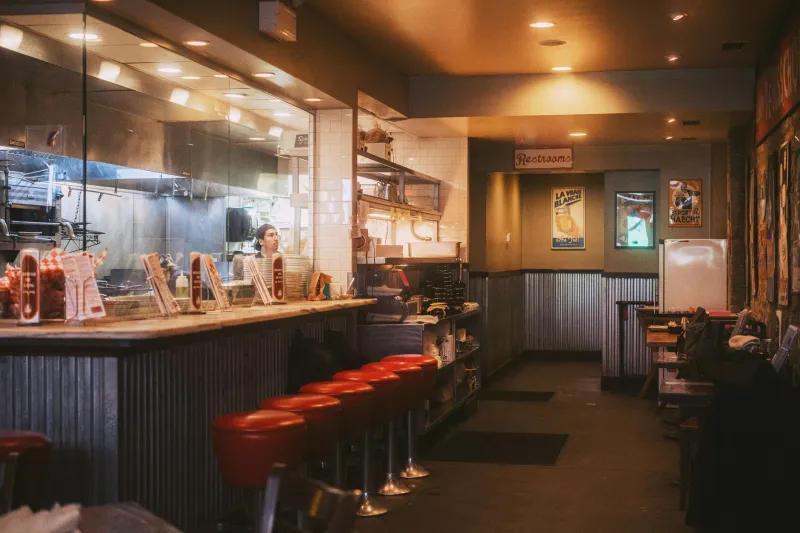
Instead, I went to the places where the weird food lives and I talked to the people who eat it without thinking twice — not celebrity chefs, not food critics with Substack newsletters, not Instagram influencers doing a "hidden gems" series. Just regular people, in diners and church basements and family kitchens, who looked at me with mild confusion when I asked them to explain why their food is good.
"It's just food," a retired schoolteacher named Donna told me in Cincinnati. "I don't know why everybody has to make it a whole thing."
Donna, I am making it a whole thing. But I promise to be respectful about it.
Cincinnati Chili: The Dish That Has Heard Every Joke
Let's get this one out of the way immediately, because no regional American food absorbs more coastal bewilderment than Cincinnati chili. The facts, for the uninitiated: it's a thin, spiced meat sauce served over spaghetti, topped with finely shredded cheddar cheese, and optionally crowned with kidney beans and onions. The spice profile involves cinnamon, allspice, and chocolate — flavors that have no business being in chili, if you are operating under the assumption that Cincinnati chili is trying to be Texas chili. It is not.
This is the point that locals make, with increasing exasperation, every single time someone from New York shows up and says it doesn't taste like "real" chili.
"It was invented by Greek immigrants in the 1920s," said Marcus, a 34-year-old who has eaten at Skyline Chili at least twice a week since childhood. "It's not trying to be Texas chili. It's its own thing. People get confused because they called it chili. Should've called it something else, maybe. But we didn't. And here we are."
Here we are indeed. I ordered a three-way — spaghetti, chili, cheese — and ate it in the manner recommended by every person I'd spoken to: with oyster crackers, without questioning anything. It was warm and savory and deeply comforting, with a spice complexity that you don't get from a standard bowl. It tasted like a city's specific history, like a hundred years of a particular immigrant family's culinary DNA folding itself into the fabric of a place.
It did not taste like Texas chili. That was never the point.
Utah Jell-O Salad: Proudly, Defiantly Itself
Utah has the highest per-capita Jell-O consumption in the United States. This is a real statistic. It has been reported on, mocked, and turned into merchandise. The state even briefly had a Jell-O-flavored license plate option. Utahns, for the most part, find the national fascination with this fact somewhere between amusing and annoying.
"People act like it's so strange," said Karen, a grandmother of seven in Provo who has been making lime Jell-O salad — with cream cheese, crushed pineapple, and Cool Whip — for family gatherings since the 1970s. "Every family has their version. It's a comfort food. It's what you bring to a potluck. I don't know why that's funny to people."
The dish's roots in Utah are genuinely interesting: Jell-O was heavily marketed to Mormon communities in the mid-20th century, partly because it's kosher-adjacent and fits within dietary guidelines that avoid coffee and alcohol. What began as a practical pantry staple evolved into a regional identity marker, the kind of food that signals you are among your people at a church potluck.
I tried three different family recipes over two days. One was aggressively sweet. One had pretzel crust and was legitimately delicious. One contained shredded carrots in a way I cannot fully explain but will not condemn. All of them were made with obvious care, served with pride, and eaten with zero irony by people who have been eating them their entire lives.
The lesson here: food doesn't need to be sophisticated to be meaningful. Sometimes a lime Jell-O mold is just a lime Jell-O mold, and that is enough.
Scrapple: The Mid-Atlantic's Proudly Unglamorous Breakfast
Scrapple is made from pork scraps — the parts that don't make it into anything else — combined with cornmeal and spices, formed into a loaf, sliced, and fried until the exterior is crisp and the interior is soft. It is, on paper, the kind of food that would generate a think piece about food waste reduction if it were invented today and served at a Brooklyn brunch spot for $18 a slice.
Instead, it has been eaten in Pennsylvania, Delaware, and Maryland since the colonial era, mostly by people who don't need a think piece to tell them it's good.
"My dad ate it. His dad ate it. I eat it," said Joe, a contractor from Wilmington, Delaware, eating a scrapple-and-egg sandwich at a diner counter. "People from other places try it and either they get it or they don't. If you don't get it, that's fine. More for us."
That attitude — more for us — came up in almost every conversation I had during this reporting trip. There's a quiet territorial pride to these regional foods, a sense that their very lack of national acclaim is part of what keeps them authentic. The moment scrapple becomes a trendy charcuterie board component at a restaurant in Los Angeles, something will have been lost.
I ate my scrapple at a Formica counter with hot sauce and did not take a photo of it. It felt like the right call.
Why the Weird Stuff Matters
American food culture has a complicated relationship with itself. It simultaneously craves recognition — look at how seriously we take our barbecue regional debates — and dismisses the foods that don't photograph well or translate easily to a national audience.
What I found, talking to people from Cincinnati to Provo to Wilmington, is that the most honest American food culture is stubbornly, cheerfully local. It doesn't need a James Beard nomination. It doesn't need a Netflix documentary. It needs a grandmother who makes it the same way every Thanksgiving, a diner that's been serving it since 1954, and a community of people who would find it genuinely baffling that anyone needs it explained to them.
The disguise, it turns out, is the point. These foods hide in plain sight — on laminated menus, in church basements, in the back of grocery stores — precisely because they've never needed to perform for an outside audience.
They were never made for you, visiting food journalist. They were made for Donna, and Marcus, and Karen, and Joe.
And honestly? That makes them taste better.