Cracked the Code: America's Dullest-Looking Diners Are Running the Most Interesting Game in Food
Cracked the Code: America's Dullest-Looking Diners Are Running the Most Interesting Game in Food
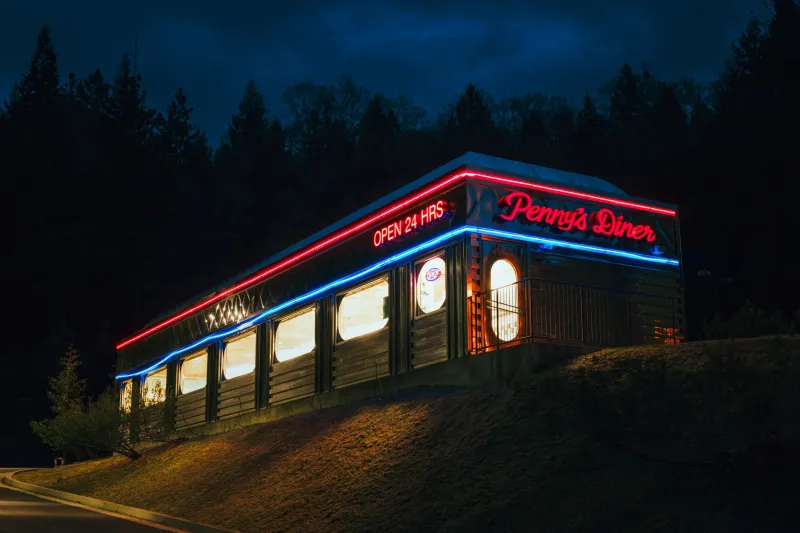
Let me paint you a picture. It's 7:14 on a Tuesday morning somewhere between two towns that don't appear on anyone's must-visit list. The parking lot is cracked asphalt. The sign has a letter missing — has had a letter missing since the Clinton administration. A hand-written note taped to the door says "WE ARE OPEN" in a tone that suggests they've had to clarify this before.
You almost keep driving.
This is the mistake. This is always the mistake.
America's most forgettable-looking diners are running a covert operation, and I have spent an embarrassing portion of my adult life blowing my cover trying to document it. The intel is in: behind the sticky menus, the mismatched chairs, and the pie case that spins like it's auditioning for a 1950s sitcom, something genuinely extraordinary is happening.
The Disguise Is the Point
Here's the thing about iconic regional diners — the ones with cult followings so devoted they border on religious — they are almost never beautiful. They are not Instagrammable. They do not have a PR team or a James Beard nomination or a reservation system that requires a credit card to hold your spot.
What they have is a cook who has been making the same biscuits since 1989 and has zero interest in telling you about it.
Take the category of diner known in food-nerd circles as the "accidental institution." These are places that became legendary entirely by accident — opened to serve truck drivers or mill workers or the overnight shift at the plant, and then just... never stopped. The original customer base aged into regulars. Their kids became regulars. The regulars started bringing out-of-towners. Word spread, but slowly, the way real things spread: mouth to mouth, exit ramp to exit ramp.
The Yelp reviews, if they exist at all, are baffling. Three stars. "Coffee was hot." "Waitress called me honey." "Parking is fine." None of this captures the fact that the corned beef hash is the best thing you will eat in a calendar year.
The Cult Dish You'll Never See on a Food Blog
Every diner worth its salt has at least one dish that exists in a kind of oral tradition — known to regulars, invisible to outsiders. It might not even be on the menu. It's the thing you only learn to order after someone who's been coming here since Reagan tells you what to get.
In the South, it's often a specific preparation of a humble ingredient — a smothered pork chop, a bowl of butter beans with a piece of cornbread that costs a dollar fifty and tastes like it was made by someone's grandmother who genuinely loved them. In the Midwest, it might be a loose meat sandwich that locals will defend against any burger you've ever eaten. In New England, it's a chowder so aggressively regional that the recipe has never been written down because it doesn't need to be.
These dishes don't go viral. They go generational.
And the cooks who make them are, without exception, some of the most interesting people in American food. Not because they've staged at a Michelin-starred restaurant in Copenhagen. Because they haven't. Because they learned to cook from someone who learned to cook from someone, and the whole lineage is contained in a single greasy spoon on a state highway that Google Maps still hasn't fully figured out.
The Regular as Keeper of Lore
If the cook is the heart of a great diner, the regulars are its institutional memory. These are people who have been sitting in the same booth — and I mean the same booth, their booth, understood by all parties to be their booth — for decades. They know things.
They know when the owner's daughter left for college and came back. They know the one winter the pipes froze and the whole place ran on a camp stove for a week. They know which supplier delivers the good eggs and which weeks the eggs are not the good eggs. They know, crucially, what to order and what to skip, and if you are patient and non-threatening, they will tell you.
This is the secret intelligence network of American diner culture, and it is completely inaccessible to anyone who shows up once, takes a photo of their pancakes, and leaves a three-sentence review.
The rituals are real too. Diners develop their own micro-cultures — the table where the retired teachers sit every Friday, the counter stool where the guy who drove a delivery route for thirty years still sits out of habit even though he retired six years ago. The birthday pie that appears without being ordered because the waitress remembered. These aren't quirks. They're community infrastructure, functioning quietly in a building that looks, from the outside, like it probably has a questionable health inspection score.
(For the record: the health inspection scores are usually fine. I checked.)
Why the Parking Lot Lies
We've trained ourselves, in the era of algorithmic restaurant discovery, to read exteriors as signals. A beautiful room means good food. A famous chef means a destination worth planning around. A line out the door means something is happening inside worth waiting for.
The great American diner confounds every single one of these heuristics.
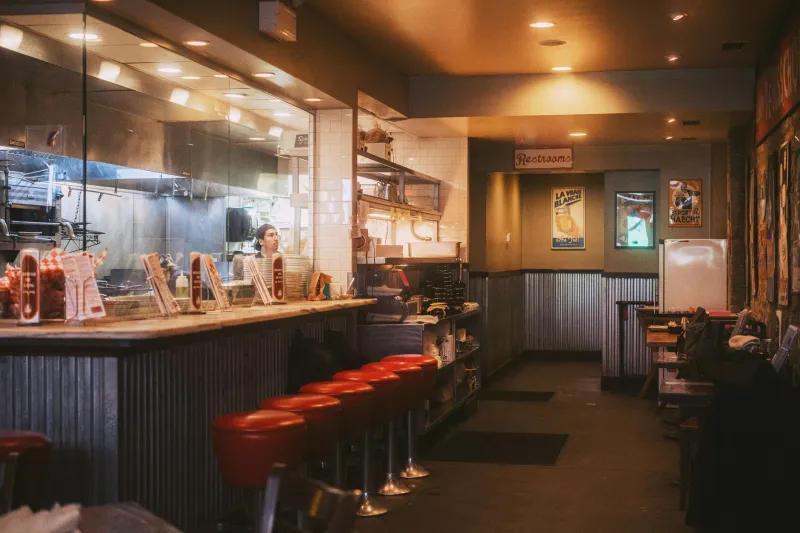
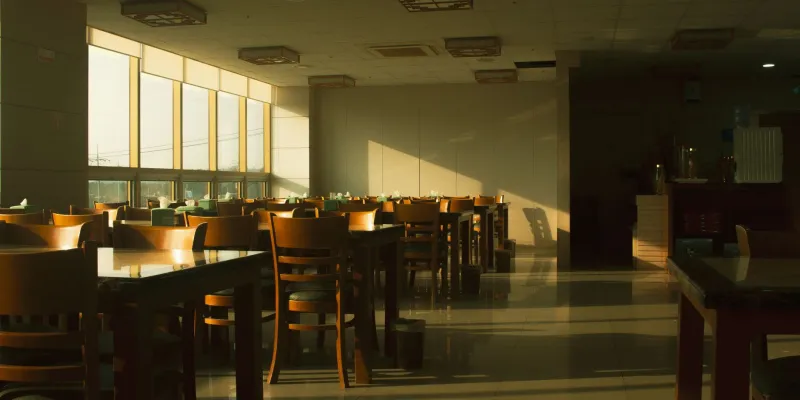
The parking lot is cracked, but the pie crust is perfect. The sign is missing a letter, but the cook has been perfecting that one dish for thirty years with an obsessive focus that would make any fine-dining chef nervous. The room is loud and fluorescent and smells like bacon and dish soap, and it is, in the truest sense of the word, alive in a way that a lot of very expensive restaurants are not.
The disguise works because we let it. We drive past. We keep looking for the place that signals its own worth loudly enough that we don't have to do any work. And while we're doing that, the regulars slide into their booths, the coffee gets poured without asking, and the best meal of someone's week happens in a building with a door that sticks in the rain.
Your Assignment, Should You Choose to Accept It
Next time you're on a road trip, a highway stretch, a drive through somewhere that isn't a destination — look for the diner that looks like nothing. The one with the handwritten sign. The one where the parking lot has two pickup trucks and a car that's been there long enough to have its own ecosystem.
Go in. Sit at the counter if there is one. Order whatever the person next to you is having. Ask the waitress what's good today, and when she tells you, believe her.
You are not just getting breakfast. You are being read into a classified operation that has been running, quietly and brilliantly, for longer than most of us have been alive.
The most thrilling food in America looks completely mundane from the parking lot. That's not a bug. That's the whole plan.