Fluorescent and Fearless: A Night Spent Eating in America's Last Truly Honest Rooms
Fluorescent and Fearless: A Night Spent Eating in America's Last Truly Honest Rooms
It is 3:17am in a Denny's booth in Memphis, Tennessee, and the man across the aisle from me is crying into his Moons Over My Hammy. Not quietly, either. Full-on, shoulders-heaving, absolutely not-caring-who-sees-it crying. His waitress, a woman named Darlene whose nametag has a small rhinestone star on it, refills his coffee without a word and gives his shoulder one firm, maternal pat before moving on. Nobody else in the restaurant reacts. A table of nursing students in scrubs keeps reviewing flashcards. Two guys in paint-splattered Carhartt jackets argue over a phone screen. A teenager in a prom dress — solo, inexplicably serene — works through a stack of pancakes like she has nowhere else to be.
This is what America looks like when it stops performing.
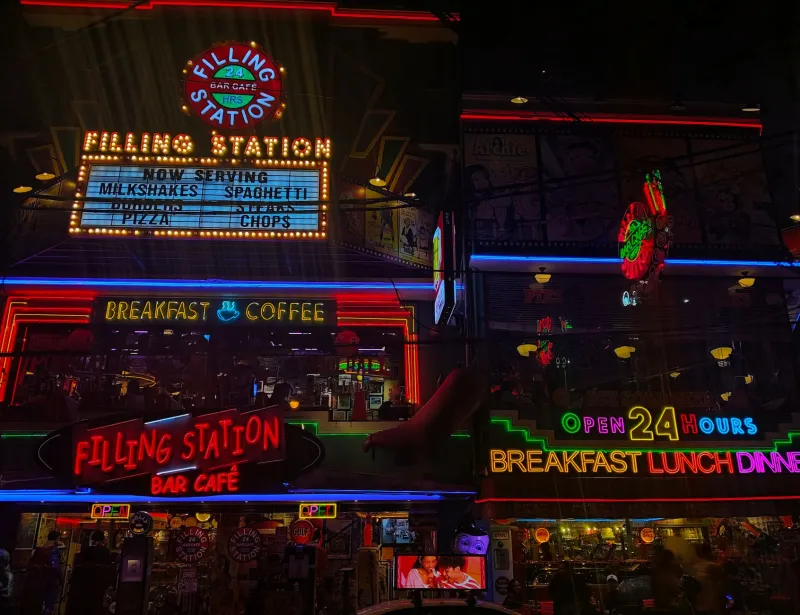
I spent three weeks visiting 24-hour diners across six cities — Memphis, Chicago, Phoenix, Louisville, Albuquerque, and Portland — arriving no earlier than 2am and leaving no later than 5. My assignment, loosely defined, was to eat. My actual education was in something harder to put on a receipt.
The Clientele Nobody Talks About
Food media loves a brunch crowd. It has opinions about the dinner rush. But the 3am diner customer exists almost entirely outside the cultural conversation, which is a genuine shame, because they are, collectively, the most interesting dining demographic in the country.
There are the shift workers — nurses, paramedics, hotel front desk staff, casino dealers, overnight warehouse employees — who eat at these hours not by choice but by schedule. They tend to order efficiently, tip well, and treat the staff with the particular respect of people who know what it means to be on your feet at an inhuman hour. In Chicago, I sat near an ER nurse named Priya who ordered the same thing every Tuesday and Thursday: a veggie omelet, wheat toast, and a chocolate milkshake. "The milkshake is the only part of the week that feels like a reward," she told me, and I wrote it down because it seemed like the kind of sentence that deserved to survive.
Then there's the bar crowd, which arrives in waves around 2am and operates on a completely different emotional frequency. They are loud, occasionally philosophical, reliably hungry, and responsible for approximately 80% of all mozzarella stick orders nationwide. In Portland, I watched a group of four negotiate a single order of chili cheese fries with the seriousness of a UN summit. In Louisville, a man in a rhinestone cowboy hat ordered a patty melt and delivered an unprompted ten-minute monologue on why diners are "the realest restaurants" to anyone within earshot. He wasn't wrong, which made it worse.
And then there are the people who simply cannot sleep. The insomniacs, the anxious, the heartbroken, the newly alone. They come in ones, usually. They sit in corner booths. They order coffee and something small — pie, mostly — and they stay a long time, and nobody asks them to leave.
What the Food Actually Tastes Like at 3am
Here's the thing food critics rarely admit: context is an ingredient. The Grand Slam at 3am tastes different than the Grand Slam at 10am, and not just because your judgment is compromised. There is something about eating in near-silence, under lighting that has never once been called flattering, surrounded by people who are not pretending to be anywhere other than where they are, that makes the food — ordinary, unfussy, deeply American food — taste almost profound.
In Albuquerque, I had a bowl of green chile stew at a place called Duran's that has been open continuously since 1929. At 3am, it tasted like the culinary equivalent of someone putting a blanket around your shoulders. The chile had heat that built slowly, the pork was falling-apart tender, and the flour tortilla on the side was the kind of soft that you only get from a kitchen that has been making them the same way for decades. I have eaten at restaurants with three-month waiting lists that didn't make me feel as taken care of.
In Phoenix, I ordered huevos rancheros at a 24-hour spot where the salsa came out in a plastic ramekin and tasted like it had been made that afternoon by someone who genuinely cared. It probably had been. The eggs were perfect — yolks still running, whites fully set — and the refried beans had a smokiness that suggested lard and zero apology about it. It cost $9.50. I left a $20 and felt like I'd gotten away with something.
The Staff Are the Real Story
If the 3am diner is a democracy, its elected officials are the overnight servers. These are not people who ended up here by accident. They chose the shift, or the shift chose them, and either way they have developed a specific skill set that daytime hospitality cannot replicate: the ability to be everything to everyone, simultaneously, without flinching.
In one night alone, I watched Darlene in Memphis talk a college kid through a panic attack, redirect a table of drunk bridesmaids away from a booth they were about to destroy, and still find time to bring me a second slice of pie I hadn't asked for because, she said, "You looked like you needed it." I did. She was correct.
The overnight cook in Louisville — a man named Gerald who had been working the same grill since 2009 — told me he preferred the late shift because "nobody's trying to impress anybody." He meant the customers, but I think he also meant himself. The food coming out of his kitchen at 3am was honest in a way that's genuinely hard to manufacture: no garnish, no architectural plating, no micro-anything. Just a perfect cheeseburger, executed with the quiet confidence of someone who has made ten thousand of them and intends to make ten thousand more.
Why This Matters More Than It Should
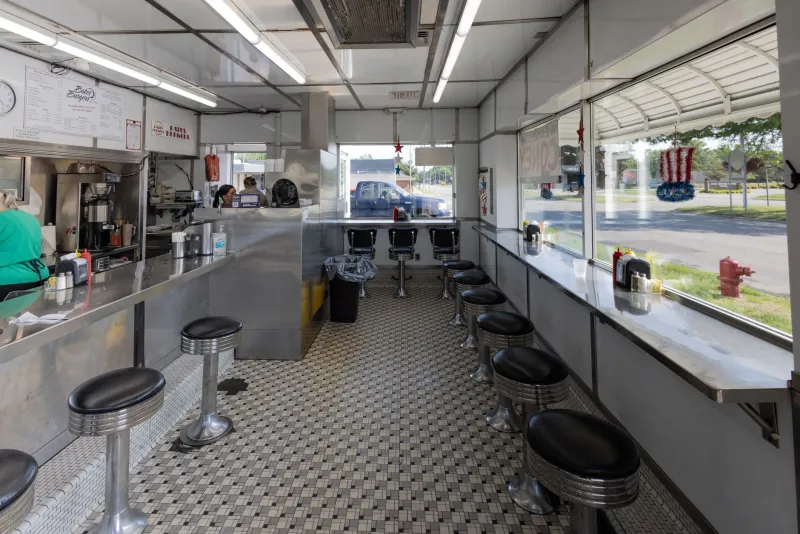
America does not have many genuinely public spaces left. The ones that remain are increasingly monetized, curated, surveilled, or socially stratified. You can't sit in a park at 3am. The bar has a cover charge. The coffee shop closed at 8. The only place that will take you — any version of you, at any hour, in any condition — and feed you something warm without requiring you to explain yourself is the 24-hour diner.
That's not a small thing. That's actually enormous.
The crying man in Memphis eventually stopped crying, finished his sandwich, and left a generous tip. The prom dress girl got a refill on her OJ. The nursing students packed up their flashcards and left in a tired, laughing cluster. Gerald flipped another burger. Darlene poured another coffee.
The world outside was still dark. Inside, under the fluorescent lights that forgive nothing and somehow make you feel forgiven anyway, America was eating. Honestly, hungrily, without an audience.
It was the best meal I had all year.