Never Enough Breadsticks: The Secret Psychology of America's Most Defended Chain Restaurant
Never Enough Breadsticks: The Secret Psychology of America's Most Defended Chain Restaurant
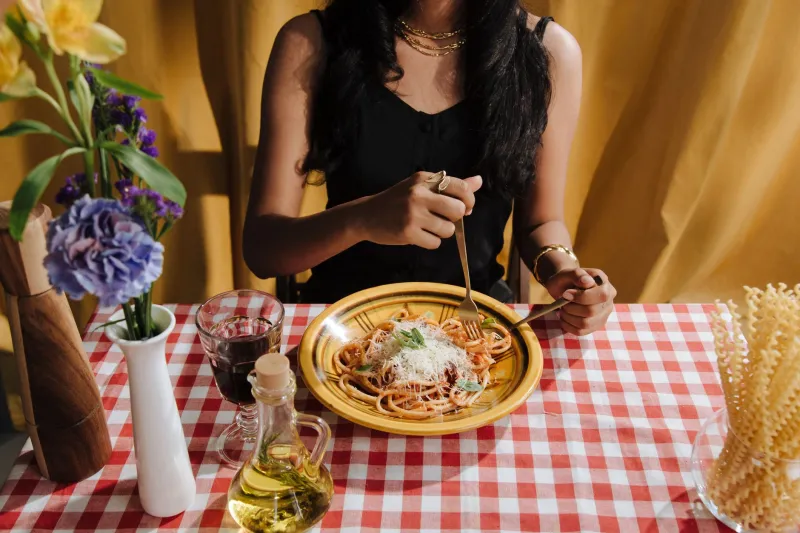
Let me set the scene. A food writer — someone who has strong opinions about the correct temperature for serving natural wine and who uses the word terroir without irony — is sitting in a booth at Olive Garden. She has a Chianti in a glass that is aggressively large. She is happy. She is not performing happiness. She is actually, genuinely, unambiguously happy.
She is also, she will tell me later, slightly afraid I'm going to make fun of her.
This is the central tension of the Olive Garden experience in 2024: it is one of the most attended restaurant chains in America, pulling in roughly $4.5 billion in annual sales, beloved by tens of millions of people — and yet a significant portion of those people feel the need to preface their enjoyment with a disclaimer. I know it's not real Italian food. I know it's a chain. Don't judge me.
The question I've been chewing on, somewhere between a second breadstick and a third, is: judge you by whose standards, exactly?
The Gatekeeping Is the Point
Food snobbery has a long and distinguished history of being wrong. The same critical establishment that once sneered at sushi as "bait" now treats omakase as a religious experience. Regional American barbecue spent decades being dismissed as unsophisticated before the food media decided it was actually the most important culinary tradition in the country. The goalposts move constantly — and they move, almost always, in whatever direction requires the most money or access to stay on the correct side of them.
Olive Garden sits squarely in the crosshairs of this dynamic. It is affordable, it is consistent, it is located in suburbs and strip malls rather than converted warehouses in walkable neighborhoods. Its sin, if you trace the mockery carefully, is not that the food is bad. It's that the food is accessible. That the people eating it are not performing a particular kind of cultural capital. That you don't need to know anyone or know anything to get a table.
Denise, 54, a dental hygienist from Columbus who has been eating at Olive Garden since the early 1990s, put it more bluntly than I could have: "People who make fun of Olive Garden have never had to figure out where to take a family of six that won't bankrupt them and won't have a meltdown because one kid only eats plain noodles. They can keep their opinions."
She is not wrong.
The Comfort Industrial Complex
There's actual science behind what Olive Garden is doing to your brain, and it is not accidental. The warm lighting. The breadsticks arriving before you've even decided you're hungry. The soup that comes in a bowl the size of a small satellite dish. These are not aesthetic accidents — they are a carefully engineered sequence of cues designed to lower your defenses and make you feel, within about four minutes of sitting down, that you are being taken care of.
Food psychologists call this "comfort scaffolding" — the layering of familiar textures, smells, and rituals that trigger a neurological response associated with safety and belonging. The breadstick is not just a breadstick. It is a warm, salted, slightly garlicky signal to your nervous system that nothing bad is going to happen here.
Chains at Olive Garden's tier have spent decades and enormous resources perfecting this scaffolding. Whatever you think of the provenance of the ingredients or the authenticity of the cuisine, the experience of eating there is doing something real. Something that a lot of more critically respected restaurants, frankly, are not doing.
Marcus, 38, a graphic designer from Atlanta who describes himself as "definitely a food person," told me he eats at Olive Garden specifically when he's had a terrible week. "I could go somewhere interesting," he said. "But sometimes I don't want interesting. I want someone to bring me a bowl of pasta and not make me feel like I have to evaluate it."
The Authenticity Trap
The most common charge leveled at Olive Garden — and the one that most reliably causes its defenders to visibly bristle — is that it isn't "real" Italian food. This is true in the same way that General Tso's chicken isn't "real" Chinese food, and American pizza isn't "real" Italian pizza, and the croissants at your airport Starbucks aren't "real" Parisian pastry. Which is to say: correct, and also largely beside the point.
American food culture has always been a process of transformation and adaptation. Italian immigrants who arrived in the late 19th and early 20th centuries were already adapting their regional cuisines to available ingredients and American tastes. What eventually became "Italian-American" food — the red sauce, the heavy pasta, the garlic bread — is its own legitimate culinary tradition. It is the food that generations of American families grew up eating at Sunday dinners and birthday celebrations.
Olive Garden is, in a sense, a mass-market version of that tradition. It is not trying to be a trattoria in Bologna. It is trying to be the Italian-American restaurant your grandmother might have taken you to, scaled up and standardized across 900 locations. That is a different project with different goals — and measuring it against the wrong standard is a category error dressed up as criticism.
The Regulars Are Not Confused
The people I spoke to who eat at Olive Garden regularly — and I spoke to a lot of them, because this is apparently a topic people have feelings about — were almost uniformly clear-eyed about what they were doing and why. Nobody thought they were eating in Tuscany. Nobody was under any illusions about the supply chain behind the fettuccine Alfredo.
What they were doing was eating a meal they enjoyed, in a place that felt welcoming, at a price that didn't require them to make difficult financial decisions. They were celebrating birthdays and first dates and retirement parties and "we survived the school year" dinners. They were doing what restaurants are actually supposed to do: providing a setting for human beings to eat together and feel good about it.
The embarrassment, where it existed, was entirely externally imposed. It was the product of a food culture that has decided certain pleasures require justification and others don't — a hierarchy that maps, with uncomfortable precision, onto class and income and geography.
Eating Dangerously, Defined
The most subversive thing you can do in contemporary food culture might be to eat exactly what you want without performing any ambivalence about it. To order the Chicken Parmigiana, accept the breadstick refill, and refuse to preface any of it with an apology.
Olive Garden has survived thirty years of critical mockery not despite its regulars but because of them — because millions of people decided, quietly and persistently, that someone else's opinion of their dinner was not their problem. That is, depending on your perspective, either deeply uncomplicated or quietly radical.
I finished my meal. I took the leftover pasta home in a box. It was good reheated the next morning, which I am also not apologizing for.
The breadsticks, for the record, did not survive the night.