Frozen in Amber: The Defiant American Restaurants Where the Menu Hasn't Blinked Since the Reagan Administration
Frozen in Amber: The Defiant American Restaurants Where the Menu Hasn't Blinked Since the Reagan Administration
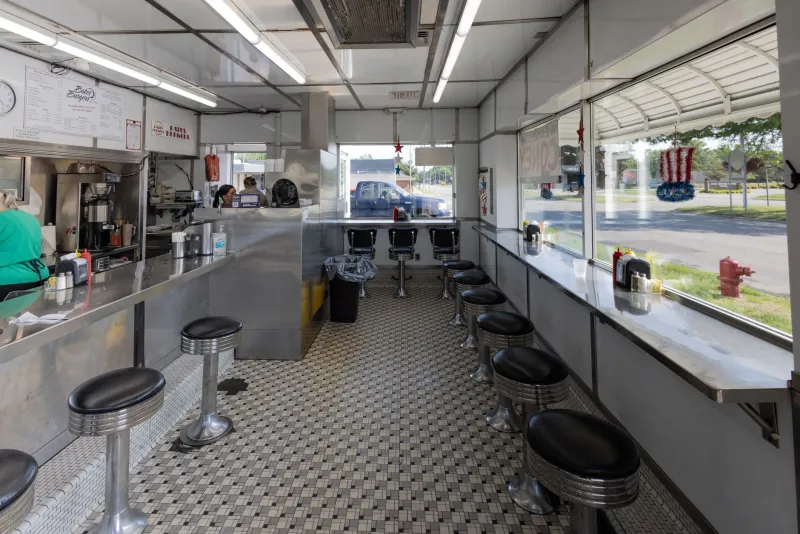
There is a diner in rural Wisconsin where the menu is printed in a font that no living computer can replicate. The laminate is so thick and so yellowed it has achieved something close to amber — geological, prehistoric, permanent. The French onion soup has been $4.75 since 1991. The owner, a man named Gerald who has the energy of someone who has never once been surprised by anything, told me this with the quiet pride of a man showing off a vintage firearm.
"People come in and ask if we've thought about adding a grain bowl," Gerald said, refilling my coffee without being asked, because of course he did. "I tell them I think about it the same amount I think about buying a jetpack."
Welcome to the culinary resistance. Not the loud, manifesto-waving kind. The kind that just... keeps serving the same patty melt.
The Badge of Stubbornness
Across the country, tucked between the ghost kitchens and the rotating seasonal concepts and the restaurants that change their entire identity every eighteen months to chase a new demographic, there exists a small and deeply committed faction of American eateries that have simply refused to participate. Their menus are not "curated" or "evolved." They are fixed. Immovable. Philosophically opposed to the very concept of a specials board.
Food historian Dr. Carolyn Marsh, who has spent the better part of a decade documenting what she calls "temporal anchor restaurants," says this stubbornness is rarely accidental. "These owners made a decision at some point — consciously or not — that their menu was finished," she told me. "Like a novelist who decides the book is done. The rest of the industry is still in rewrites. These places sent it to press."
What's fascinating is that the decision to freeze the menu is almost never framed as nostalgia by the people doing it. It's framed as honesty. Ask any of these owners why they haven't added a gluten-free option or a shareable small plate and you'll get some version of the same answer: because we're good at what we do, and what we do is this.
At a supper club in northern Minnesota that has operated continuously since 1974 — the kind of place with a relish tray that arrives before you've even been handed the menu — co-owner Diane Peltier put it with startling directness: "Every time a restaurant changes their menu, they're telling you they weren't sure before. We were sure. We're still sure."
What a Dish Tastes Like When It Has a History
Here's the thing nobody talks about when they debate the merits of menu stagnation: context changes flavor. I know that sounds like the setup to a very pretentious TED talk, but stay with me.
When I ordered the beef stroganoff at a family restaurant in Ohio that has served the exact same recipe since 1983 — same egg noodles, same sour cream ratio, same slightly too-much-paprika finish — I knew I was eating something that had been ordered roughly 200,000 times before me. The dish had a record. A track record. It had fed people on first dates and after funerals and on random Tuesday nights when nobody felt like cooking. That knowledge doesn't just add sentiment; it adds a kind of gravitational weight to the experience that no amount of micro-herb garnish can manufacture.
Food psychologist and author Dr. Jenna Harlow, who studies how narrative shapes taste perception, confirms this isn't just sentimental nonsense. "When diners know a dish has a long, unbroken history, it activates trust and familiarity cues that measurably affect enjoyment," she said. "You're not just eating the food. You're eating the continuity."
Which might explain why regulars at these places talk about their usual orders with the kind of reverence normally reserved for family heirlooms. At a Greek-American diner in Baltimore that has run the same one-page menu since 1988, a regular named Frank — who has been coming in every Saturday for twenty-two years — described his standing order of a club sandwich and tomato soup with the specificity of someone recounting a treasured piece of personal mythology. "It's the same every time," he said. "That's not boring. That's reliable. There's a difference."
What the Industry Keeps Trying to Reinvent
The modern restaurant industry is, in many ways, pathologically afraid of standing still. New menus, new concepts, new brand identities — the churn is relentless and the casualties are everywhere. A majority of restaurants don't survive their fifth year, and a significant chunk of those that fail do so while trying to pivot, rebrand, or chase a trend that evaporated before the new signage arrived.
The frozen-menu restaurants, by contrast, have something that no amount of consulting can manufacture: institutional memory. They know their food works because it has worked, repeatedly, across decades. They know their customers because their customers have been the same customers, or the children of those customers, for thirty years. The risk calculus is completely different when you're not gambling on whether anyone will order the miso-glazed cauliflower.
Dr. Marsh points out that this model also creates a different relationship between kitchen staff and the food. "When a cook has made the same pot roast a thousand times, they're not just following a recipe — they're maintaining a craft," she said. "There's a mastery that comes from repetition that you simply cannot get when the menu rotates every season."
Gerald in Wisconsin said something similar, less academically but more memorably: "My cook has been making the same liver and onions since 2003. You think anyone at some new place downtown can touch it? They haven't made it enough times yet."
The Regulars Know Something You Don't
If you want to understand what these restaurants are actually doing right, stop listening to the owners for a second and watch the regulars. They arrive with a certainty that is almost athletic. They don't open the menu. They don't deliberate. They sit down, they order the thing, and they settle into their seats with the exhale of someone who has successfully returned home after a long trip.
There is a specific pleasure in knowing exactly what you're going to get and getting it. In a food culture that increasingly fetishizes novelty and surprise — the mystery box tasting menu, the "trust the chef" omakase, the dish that arrives looking nothing like what you imagined — these restaurants are offering something genuinely countercultural: the comfort of certainty.
And before you dismiss that as small or unambitious, consider that certainty is, in fact, one of the hardest things to deliver consistently in the restaurant business. Any kitchen can be interesting once. Very few can be reliable for forty years.
The Verdict from Someone Who Ate Across the Timeline
After a summer of eating my way through America's most temporally committed restaurants — the supper clubs and Greek diners and family joints where 1987 is not a throwback but simply the present — I came away with a conviction I didn't expect to have.
The frozen-menu restaurants aren't behind. They finished. The rest of the industry is still running a race these places already completed, decades ago, and then wisely decided to stop running.
The patty melt in Wisconsin was, for the record, exceptional. Gerald didn't need to know that I thought so. He already knew.