The $8 Glass of Tap Water and Other Restaurant Grifts I Survived to Tell You About
The server materialized at my table with the quiet confidence of someone who had done this thousands of times and felt no guilt about any of it. "Still or sparkling?" she asked, before I had removed my jacket. Before I had opened a menu. Before I had established any kind of baseline understanding of where I was or what anything cost.
"Tap is fine," I said.
She smiled the smile of someone who had anticipated this response and prepared for it. "We do still and sparkling," she repeated, with the gentlest possible emphasis on the word we, as if tap water were something that happened at other establishments. Lesser establishments. Establishments that didn't care about my hydration experience.
I ended up with a glass bottle of still water. It was $8. It was, chemically, water. This is where we are.
The Upsell Industrial Complex
American restaurants have always engaged in the gentle art of encouraging you to spend more than you planned. This is not a secret and it is not entirely unreasonable — restaurants operate on margins that would make most business owners weep openly, and getting you to add a cocktail or an appetizer is legitimate commerce. But somewhere along the line, a meaningful subset of American dining establishments crossed the line from encouragement into something that rhymes with manipulation and starts with the same letter.
I spent six weeks documenting it. I visited 22 restaurants across five cities, kept every receipt, interviewed four current and former servers willing to talk, and ordered things I didn't want to see how hard the system would push back. Here's what I found.
The Water Ambush
The water play is the opening move, and it's elegant in its simplicity. The server asks a binary question — still or sparkling — before you've had a chance to establish that you want neither, at a price point that doesn't appear on the menu until the check arrives. In three separate restaurants, I watched tables of four accept bottled water without discussion and end up with a $24–32 line item on their bill for a substance that comes out of the wall for free.
When I asked a former server at a mid-range Italian chain in Chicago — who asked to remain anonymous, which tells you something — why they led with the water question, the answer was immediate: "Because if you ask at the beginning, before people are settled in and reading the menu, they just say yes. They're not in decision-making mode yet. They're still taking off their coats."
The coat moment. They're coming for you during the coat moment.
Menu Design as Psychological Architecture
I sat with a copy of the menu from a steakhouse in Dallas that shall remain unnamed and spent twenty minutes just looking at the structure before ordering anything. What I found was a masterclass in strategic ambiguity.
The steaks were listed with their base prices. The word "sides" appeared in small text at the bottom of each description, followed by a dagger symbol that referred to a footnote explaining sides were "available à la carte." The footnote was in a font size I would describe as "aggressively humble." Three tables near me ordered steaks and expressed visible surprise when their sides arrived on a separate check line. One man said, out loud, "I thought that came with it," which is the sound of the system working exactly as designed.
In high-end restaurants, this ambiguity is even more refined. Supplements appear mid-menu with no particular fanfare. A "seasonal enhancement" to a pasta dish, priced at $14, was described only as "black truffle, in season." It was not explained that this was optional. It was not explained that opting in meant $14 more. It was simply... present, the way a toll booth is present: inevitable-feeling, easy to miss until you're through it.
The Cocktail Nudge
Two of the servers I spoke with independently described the same technique for steering tables toward premium cocktails. The trick, both said, is specificity. When a table asks for a drink recommendation, you don't say "we have great cocktails." You say "the Oaxacan Old Fashioned is incredible right now" — and you name a specific, premium item as though it's the obvious choice for a person of taste. You don't mention the price. You don't mention the house margarita at half the cost. You name the $22 drink with conviction and let social momentum do the rest.
"People don't want to seem cheap," one of them told me. "If you tell them something specific is good, most of them will order it because they don't want to look like they flinched."
This is not villainy. This is psychology, and it works.
The Bread Situation
In four restaurants, bread arrived at the table without being requested. In two of those restaurants, the bread was complimentary. In the other two, it appeared on the check at $6 and $9 respectively, with no prior mention. When I flagged this at one of them, the server said — and I want to be precise here — "Oh, I thought you knew." Reader, I did not know. The table next to me also did not know. We exchanged a look that communicated everything.
The Receipts, Literally
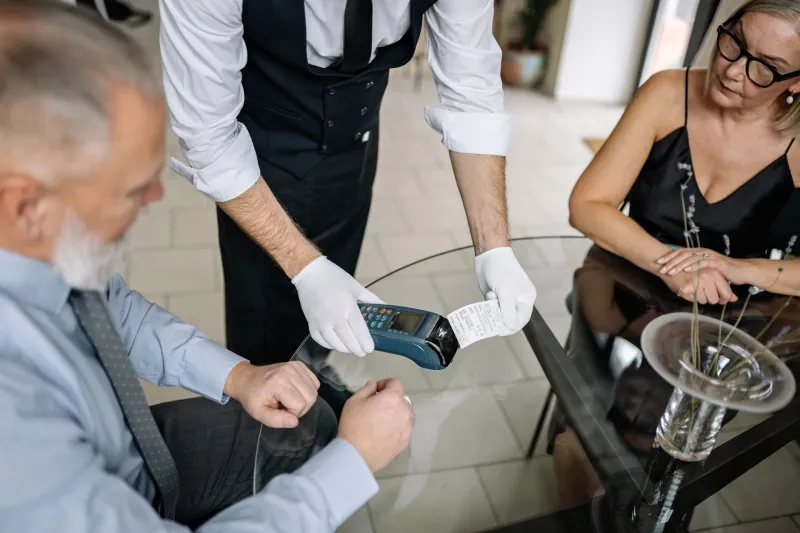
Here is what a recent dinner for two looked like at a well-reviewed "approachable" restaurant in Nashville:
- Two entrées: $68
- One bottle of still water, unrequested, placed on the table on arrival: $9
- Two "signature cocktails" recommended unprompted by the server: $44
- Bread service, arrived before menus: $8
- One "seasonal supplement" on an entrée, not flagged as optional: $12
- Dessert menu presented with the line "can I bring you something sweet?": declined, but the question cost us four minutes and a moment of social pressure
- Total before tip: $141
- Amount we intended to spend: approximately $80
That's a 76% gap between intention and reality, engineered entirely through technique.
What You Can Actually Do About It
The servers I spoke with were surprisingly forthcoming about countermeasures, perhaps because they respected the question. The most consistent advice: establish your parameters early and explicitly. When the server approaches, before they can ask about water, say "tap water is great, thanks" as your first sentence. When they offer a cocktail recommendation, ask for the price before responding. When bread arrives, ask if it's complimentary before touching it — the hesitation in the server's response will tell you everything.
None of this will make you popular. All of it will make you a more expensive person to upsell. Sometimes that's enough.
The restaurants doing this aren't cartoonishly evil. They're businesses with rent and payroll and food costs that would astonish you. But there's a meaningful difference between making it easy for customers to spend more and making it confusing for them to spend less. The best restaurants I visited did the former. The ones on my receipts did the latter.
Order accordingly. And for the love of everything, tell them you want tap water before they ask.