Crime Scene Cuisine: Why the Ugliest Plates in America Taste the Best
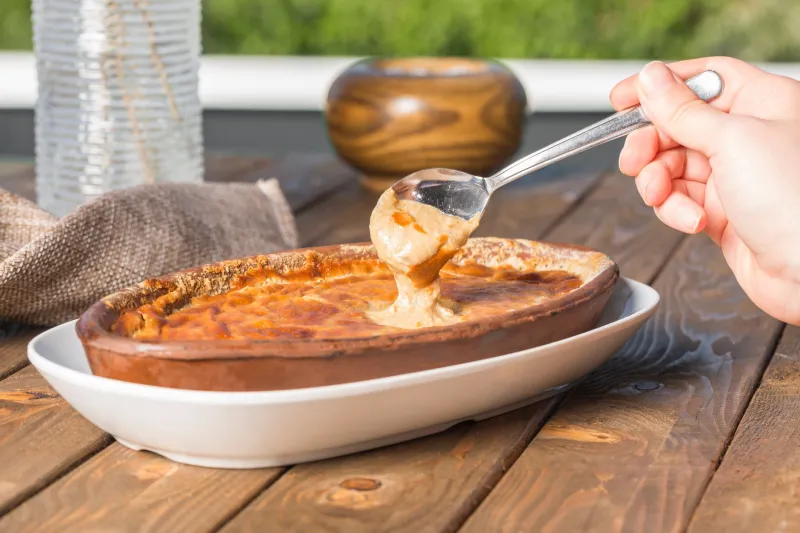
Let me describe something to you. It's brown. It's wet. The edges have collapsed into the center in a way that suggests structural failure. There are at least three unidentifiable components pooling together in what could generously be called a "sauce" and less generously be called "evidence." It smells like garlic, rendered fat, and something your cardiologist would prefer you didn't know about.
You want it. You want it desperately. You just don't want anyone to see you eating it.
Welcome to the most honest food in America.
The Instagram Industrial Complex and What It Did to Your Taste Buds
Somewhere around 2014, American diners collectively decided that food needed to be worthy of documentation before it was worthy of consumption. Towers of ingredients replaced honest piles. Smears replaced sauces. Edible flowers appeared on dishes that had no business hosting flowers. A generation of chefs learned to cook for a four-inch screen rather than a human mouth, and a generation of diners learned to rank meals by their photogenic potential rather than their actual flavor.
The result? We've been conditioned to distrust anything that looks like it was made by someone who was actually concentrating on how it tastes.
This is a tragedy. And I have receipts.
The Gas Station Burrito Defense
I need you to take a breath before I say this: some of the best burritos in America are sold at gas stations. Not artisan gas stations. Not the ones with reclaimed wood shelving and locally sourced kombucha on tap. I mean the kind of gas station where the floor cleaner smells like it's been in continuous use since 1987 and there's a handwritten sign above the roller grill that says "HOT" as if that's the primary selling point.
In the Southwest, particularly in New Mexico, Arizona, and parts of Texas, gas station burritos are a legitimate culinary institution. They're wrapped in foil. They arrive looking like a deflated football that lost a fight. The tortilla has gone slightly translucent from the steam, which sounds unappetizing and is, visually, genuinely unappetizing. But inside there is a slow-cooked chile verde or a red pork situation that has been simmering since before you woke up, seasoned by someone who learned the recipe from someone who didn't measure anything.
No microgreens. No architectural presentation. Maximum flavor. The ugliness is, in a very real sense, proof of authenticity.
Brown Stews and the Restaurants That Don't Want Your Instagram
There is a category of restaurant in America that I have come to think of as Willfully Unphotographable. These are the Haitian spots in Miami where the griot arrives glistening and dark and piled without ceremony. The Filipino joints in the Los Angeles strip malls where the dinuguan — a pork blood stew that looks, I will not lie to you, like something from a crime procedural — is served in a styrofoam cup next to fluorescent-lit condiment packets. The West African spots in Houston where the egusi soup comes out looking like a swamp that has developed ambitions.
Every single one of these dishes is extraordinary. Every single one of them would get approximately forty likes on Instagram, which means they are eaten by people who are there for the food and not the content, which means the restaurants have absolutely no incentive to compromise the recipe for the sake of aesthetics.
This is the ugly food pipeline, and it is feeding America's most discerning eaters in plain sight.
The Casserole Situation
I spent two afternoons eating in senior care facilities. I want to be upfront about that. I am not here to be condescending about institutional food — I am here to tell you that a tuna noodle casserole made by a woman named Dolores who has been running the kitchen at a nursing home in Akron, Ohio, since 1998 is one of the most comforting and genuinely pleasurable eating experiences I have had in the last calendar year.
It looked like a beige disaster. The top was slightly over-browned in patches. The noodles had given up their individual identities entirely and merged into a collective. There was no garnish. There was no concept. There was just decades of knowing exactly how much salt and exactly how long and exactly what kind of cream of mushroom situation produces something that tastes like being taken care of.
No restaurant charging $34 for a "deconstructed" version of this dish has ever improved upon it. They have only made it prettier and worse.
The Flavor-to-Photogenicity Ratio: A Rough Field Guide
After extensive and deeply personal research, I've developed what I'm calling the Inverse Glamour Principle: the more a dish resembles something that would be tagged #foodporn, the more likely it is to taste like the idea of food rather than food itself. Conversely, the more a dish resembles something you'd be embarrassed to photograph, the more likely it is to have been made by someone who had to make it good because they had nothing else going for it.
Some rough data points:
- A beautiful beet salad with whipped ricotta and candied walnuts: 7/10, tastes like effort
- A bowl of menudo from a taqueria with no Yelp page: 9.5/10, tastes like a revelation and also a hangover cure
- A plated salmon with microherb confetti: 6/10, technically correct
- A smashed fish sandwich from a paper bag at a roadside seafood shack in Louisiana: 10/10, transcendent, smells like your hands for three hours, worth it
Why Ugliness Is Honesty
Here is the thing about beautiful food: it takes time and attention that could otherwise be spent on flavor. When a kitchen is focused on quenelles and tweezers and sauce dots, it is not focused on the low-and-slow, the proper seasoning, the grandmother technique, the patience that produces something genuinely delicious.
Ugly food, by contrast, has nothing to hide behind. It cannot rely on visual seduction. It has to taste good because that is literally its only play. The gas station burrito can't charm you with its plating. The brown stew cannot win you over with its color palette. They have to deliver on flavor, and so they do.
The most dangerous thing the Instagram era did to American dining wasn't make us shallow. It's that it gave mediocre food a place to hide. A gorgeous plate is a distraction. A crime scene on a styrofoam tray is a promise.
Eat accordingly.